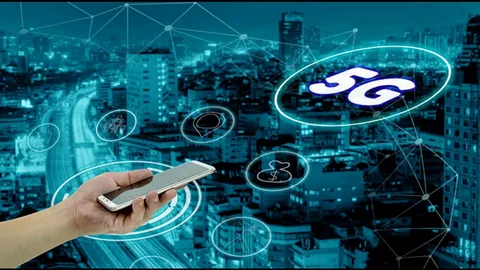
Technology has always transformed the way people communicate, work, and interact with the world. The arrival of 5G technology marks another major milestone in this journey. Unlike previous generations of wireless networks, 5G is designed not only to provide faster internet speeds but also to support billions of connected devices, enable real-time communication, and power innovations that were once considered futuristic.
According to the latest Ericsson Mobility Report (June 2026), global 5G subscriptions have surpassed 3 billion, and nearly half of all mobile data traffic now travels through 5G networks. Industry experts expect these numbers to continue growing rapidly as more countries expand their infrastructure and businesses adopt advanced digital solutions. At the same time, GSMA estimates that mobile technologies contributed $7.6 trillion to the global economy in 2025, with even greater economic impact expected by 2030 as 5G and AI continue to evolve. These figures highlight that 5G is no longer an emerging technology—it is becoming the foundation of the modern digital economy.
Understanding 5G Technology
The term 5G refers to the fifth generation of mobile network technology. While previous generations mainly focused on increasing internet speeds, 5G introduces three major improvements: ultra-fast data transfer, extremely low latency, and the ability to connect millions of devices simultaneously. This means that smartphones, smart homes, industrial robots, autonomous vehicles, and healthcare equipment can all communicate efficiently through the same network.
One of the biggest differences between 4G and 5G is latency. Instead of waiting several milliseconds for data to travel, 5G can reduce response times dramatically, allowing nearly real-time communication. This improvement is essential for technologies such as autonomous vehicles, remote surgery, augmented reality, and industrial automation. At the same time, 5G networks are designed to handle massive numbers of connected devices without slowing down, making them ideal for the growing Internet of Things (IoT). These capabilities allow businesses and consumers to experience a level of connectivity that was impossible only a few years ago.
The Global Growth of 5G
The expansion of 5G has accelerated across the world. Telecommunications companies continue investing billions of dollars in new infrastructure, while governments recognize the importance of reliable digital connectivity for economic growth. Industry forecasts show that 5G adoption will continue increasing throughout the remainder of the decade.
| Metric | Latest Data |
|---|---|
| Global 5G Subscriptions | Over 3 billion |
| Mobile Economy Contribution (2025) | $7.6 trillion |
| Expected Economic Impact by 2030 | $11.3 trillion |
| 5G FWA Providers | 71% |
Countries in Asia, Europe, North America, and the Middle East continue leading deployment efforts, while many developing nations are rapidly expanding their networks. Pakistan has also begun moving toward nationwide 5G deployment following its spectrum auction, opening new opportunities for businesses and consumers alike. Although infrastructure development takes time, experts believe improved connectivity will strengthen digital services, online education, e-commerce, fintech, and remote work across the country.
Faster Internet for Everyday Life
For most people, the first noticeable benefit of 5G is speed. Downloading large files that once took minutes can now happen within seconds under ideal conditions. Streaming 4K and even 8K videos becomes smoother, cloud gaming experiences improve significantly, and video calls become more stable even during periods of heavy network traffic.
Remote work has also benefited tremendously. High-quality video conferencing, instant cloud synchronization, collaborative editing, and virtual meetings all become more responsive with lower latency. Students attending online classes experience fewer interruptions, while freelancers and businesses can upload large media files much faster. Beyond entertainment and productivity, faster connectivity also enhances smart home devices, allowing security cameras, voice assistants, lighting systems, and appliances to communicate more efficiently.
Smart Cities Powered by 5G
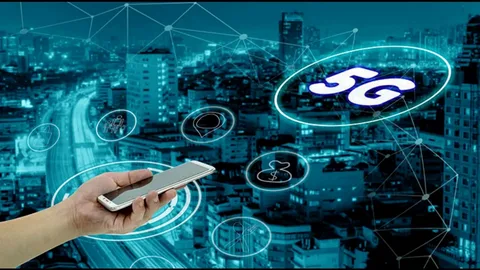
Modern cities are becoming increasingly connected. With 5G, city infrastructure can process enormous amounts of information in real time, helping governments improve transportation, public safety, and energy management.
Traffic lights can adjust dynamically according to traffic flow, reducing congestion and fuel consumption. Smart parking systems help drivers locate available spaces, while connected surveillance systems improve emergency response times. Environmental sensors can monitor air quality, detect floods, or identify infrastructure problems before they become serious. These improvements create safer, cleaner, and more efficient urban environments while reducing operational costs for municipalities.
Revolutionizing Healthcare
Healthcare is one of the industries expected to benefit the most from 5G technology. Faster networks enable doctors to consult patients remotely using high-definition video, while wearable devices continuously monitor heart rate, blood pressure, oxygen levels, and other vital signs.
Hospitals can also share large medical images almost instantly between specialists, improving diagnosis and treatment planning. Although remote robotic surgery remains limited to specialized environments, the low latency of 5G makes such advanced procedures increasingly practical. Emergency medical teams can transmit patient information to hospitals before arrival, allowing doctors to prepare treatment in advance and potentially saving lives.
Transforming Industries
The industrial sector is undergoing significant digital transformation thanks to 5G connectivity. Manufacturing facilities increasingly rely on connected robots, automated quality inspections, predictive maintenance systems, and AI-powered production management. Real-time communication between machines improves efficiency while reducing downtime and maintenance costs.
Agriculture also benefits from precision farming. Farmers can use connected drones, soil sensors, weather monitoring systems, and automated irrigation to maximize crop yields while reducing water and fertilizer consumption. Transportation companies use 5G to monitor fleets, optimize delivery routes, and improve logistics operations. Warehouses equipped with autonomous robots can manage inventory more accurately while increasing productivity.
Entertainment and Gaming
The entertainment industry has embraced 5G by delivering higher-quality streaming experiences, faster downloads, and more immersive cloud gaming. Instead of relying on expensive gaming hardware, players can stream demanding games directly from cloud servers with minimal delay.
Virtual Reality (VR) and Augmented Reality (AR) applications also become far more practical thanks to lower latency. Sports broadcasts, concerts, educational simulations, and interactive experiences continue evolving as developers create new forms of digital entertainment that take full advantage of faster wireless connectivity.
Challenges Facing 5G
Despite its impressive capabilities, 5G also faces several challenges. Building nationwide infrastructure requires enormous financial investment, particularly because higher-frequency signals often require additional towers and equipment. Rural regions may receive coverage more slowly than densely populated cities.
Cybersecurity remains another important concern. As billions of connected devices communicate through 5G networks, protecting personal information and critical infrastructure becomes increasingly important. Governments, telecom operators, and technology companies continue investing heavily in network security, encryption, and privacy protections to address these risks.
The Future Beyond 5G
While 5G continues expanding worldwide, researchers have already begun developing future wireless technologies that will eventually lead to 6G. Artificial intelligence, network slicing, edge computing, satellite integration, and advanced automation are expected to become even more common throughout the remainder of this decade.
Industry experts predict that future mobile networks will support intelligent AI agents, advanced robotics, immersive mixed reality experiences, and even more sophisticated connected infrastructure. Rather than replacing 5G immediately, future technologies will build upon today’s networks to create even smarter digital ecosystems.
Conclusion
5G technology represents far more than faster smartphone internet. It serves as the digital backbone for smart cities, connected healthcare, intelligent manufacturing, autonomous transportation, cloud computing, and countless innovations still being developed. As infrastructure expands and adoption accelerates, both individuals and businesses will continue discovering new ways to improve productivity, communication, and quality of life.
Although challenges such as infrastructure costs, security, and rural coverage remain, the long-term outlook for 5G is overwhelmingly positive. Combined with artificial intelligence and cloud technologies, 5G is creating the connected world that previous generations of wireless technology could only imagine.
Frequently Asked Questions
1. What is 5G technology?
5G is the fifth generation of wireless mobile networks, offering faster speeds, lower latency, and greater device connectivity than previous generations.
2. Is 5G faster than 4G?
Yes. Under ideal conditions, 5G can deliver significantly faster download and upload speeds while reducing network delays.
3. How does 5G benefit businesses?
Businesses benefit through automation, cloud computing, AI integration, improved communication, predictive maintenance, and smarter operations.
4. Is 5G safe?
Current scientific evidence from major health organizations has not established that 5G networks operating within regulatory limits pose health risks.
5. What comes after 5G?
Researchers are developing 6G technologies, expected to introduce even faster communication, AI-native networking, advanced sensing capabilities, and broader global connectivity.