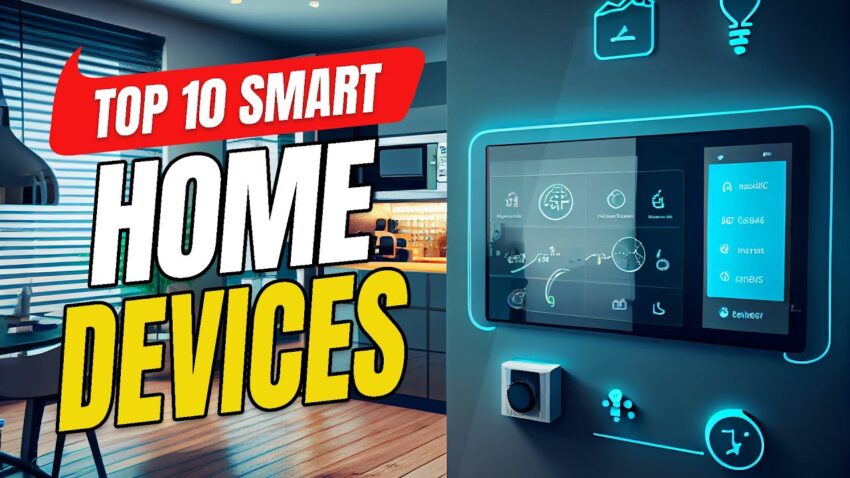
Introduction: Stepping into the Smart Home Era
The concept of a “smart home” has rapidly evolved from futuristic fantasy to an accessible reality, transforming the way we interact with our living spaces. With advancements in technology, our homes are becoming more connected, efficient, and responsive to our needs. We are moving beyond simple convenience, embracing systems that offer enhanced security, optimized energy consumption, and seamless automation of daily routines. Indeed, a remarkable 93% of Americans now own at least one smart home device, indicating a significant shift in household technology adoption. This article will guide you through the Top 10 Must-Have Tech Gadgets for Your Smart Home, helping you navigate the exciting landscape of connected living.
The Core of Your Connected Home: Must-Have Gadgets
Building a smart home involves integrating various devices that communicate and cooperate to create a cohesive ecosystem. These gadgets fall into several key categories, each contributing to a more intelligent and responsive home environment.
Smart Hubs & Voice Assistants: Your Central Command
At the heart of every smart home is a central command system, often a combination of a smart hub and a voice assistant. These devices act as the brain of your connected ecosystem, allowing you to control multiple gadgets with simple voice commands or through a single app.
- Smart Speakers/Displays (e.g., Amazon Echo Show 8, Google Nest Hub Max, Apple HomePod): These are perhaps the most common entry points into smart home technology, with 73% of Americans owning a speaker/assistant device. Devices like the Amazon Echo Show 8 are praised for their wide compatibility, while the Google Nest Hub Max offers excellent voice AI and seamless integration for Android and Nest users. For those prioritizing privacy, the Apple HomePod is a strong choice, encrypting communication and processing many commands locally. These devices not only play music and answer questions but also serve as the primary interface for controlling other smart devices, from lights to thermostats.
- Matter-Certified Hubs: With the emergence of Matter, a universal smart home protocol, future-proofing your smart home is becoming easier. Matter-certified devices are designed to work across Google, Alexa, and HomeKit simultaneously, ensuring broader compatibility and local communication even when offline. This is an important consideration for a truly integrated smart home experience.
Advanced Security & Monitoring: Peace of Mind, Redefined
Home security remains a top motivator for smart home purchases. Smart security gadgets offer real-time monitoring, remote control, and alerts, providing an unparalleled sense of safety and control over your property.
- Smart Video Doorbells (e.g., Google Nest Doorbell, Arlo Essential Wire-Free Video Doorbell): These devices detect visitors, send alerts to your smartphone, and allow for two-way audio communication, even when you’re not home. The Google Nest Doorbell (Battery) offers solid picture quality, clear audio, and excellent motion detection, integrating well with Google Home. The Arlo Essential Wire-Free Video Doorbell is noted for its intelligent camera that distinguishes people from other moving objects, reducing false notifications.
- Smart Security Cameras (e.g., Arlo Pro 4 Spotlight Camera, Google Nest Cam Outdoor, EufyCam 2C): For comprehensive surveillance, smart cameras are essential. The Arlo Pro 4 offers 2K video resolution, color night vision, and advanced motion detection, making it an excellent choice for indoor security. The Google Nest Cam Outdoor provides reliable 1080p HD video and integrates seamlessly with Google Home. For those seeking impressive battery life and local storage without subscription fees, the EufyCam 2C is a strong contender.
- Smart Locks (e.g., Schlage Encode Plus Smart Wi-Fi Deadbolt, Yale Assure Lock 2, Aqara Smart Lock U100): Smart locks offer keyless entry, remote control, and activity logs, enhancing both security and convenience. The Schlage Encode Plus Smart Wi-Fi Deadbolt is a top pick for its built-in Wi-Fi, voice control compatibility, and Apple Watch integration. The Yale Assure Lock 2 stands out for its sleek design and multi-platform compatibility, including Apple HomeKit, Google Assistant, and Alexa. The Aqara Smart Lock U100 provides robust integration with Apple HomeKit and supports other platforms like Google Home and Alexa, featuring fingerprint recognition and NFC tags.
Comfort, Efficiency & Automation: Elevating Daily Living
Beyond security, smart gadgets significantly enhance daily comfort, optimize energy use, and automate various household functions, leading to a more convenient and efficient lifestyle.
- Smart Thermostats (e.g., Nest Learning Thermostat, Ecobee Smart Thermostat Premium, Amazon Smart Thermostat): These devices learn your preferences, allow remote temperature adjustment, and optimize heating and cooling to save energy. The Nest Learning Thermostat is a premium powerhouse known for its intelligent, user-friendly design and comprehensive smart home integration, offering potential savings of 10-12% on heating and 15% on cooling bills. The Ecobee Smart Thermostat Premium is a feature-rich contender compatible with Google Assistant, Apple HomeKit, and Alexa, and includes passive infrared sensors to adjust to “away” mode automatically.
- Smart Lighting Systems (e.g., Philips Hue, GE CYNC Smart LED Bulbs, Kasa Smart Light Bulbs): Smart lighting allows you to control brightness, color, and scheduling remotely or via voice commands, and can even reduce energy consumption by up to 90% compared to traditional bulbs. The Philips Hue Starter Kit offers a comprehensive whole-home automation experience with brilliant lighting and a broad spectrum of colors. GE CYNC Smart LED Bulbs are a great overall choice, offering vivid colors and Matter compatibility for future expansion.
- Smart Plugs (e.g., TP-Link Tapo P110M, Kasa Smart Plug Mini, Eve Energy): These inexpensive and easy-to-install devices turn ordinary appliances into smart ones, allowing you to remotely control power, set schedules, and even track energy consumption. The TP-Link Tapo P110M is a top pick for its compact size, energy monitoring, and Matter compatibility. The Kasa Smart Plug Mini is another favorite for its user-friendly app and compatibility with Alexa, Google Assistant, and Apple HomeKit.
- Robotic Vacuums: While not explicitly detailed in the search results as a “top 10 must-have” with specific models, robotic vacuums are a popular convenience-focused device, found in 29% of smart homes. They automate floor cleaning, often integrating with voice assistants for scheduled or on-demand operation, freeing up valuable time.
- Smart Smoke/Carbon Monoxide Detectors: Although not highlighted with specific models in the top lists, smart smoke and carbon monoxide detectors are crucial for safety. They provide alerts to your phone, even when you’re away, and can often integrate with your smart home system to trigger other actions, such as turning on lights during an emergency. Interest in these devices is high, with one-third of consumers expressing interest.
Frequently Asked Questions About Smart Home Tech
We understand that stepping into the smart home world can bring up a lot of questions. Here, we address some common concerns.
What is the best smart home ecosystem to choose?
Choosing the best smart home ecosystem depends heavily on your existing devices and preferences. The major players are Amazon Alexa, Google Home (or Google Assistant/Gemini for Home), and Apple HomeKit.
- Google Home is recommended for those prioritizing voice control accuracy and users already invested in Nest or ADT products, or Android users seeking tight integration.
- Amazon Alexa offers wide compatibility with numerous smart home devices and services.
- Apple HomeKit is a strong choice for privacy, encrypting all communication end-to-end and processing most commands locally. It allows control via the Home app on Apple devices or Siri voice commands.
The emerging Matter protocol aims to bridge these ecosystems, allowing devices to work across platforms simultaneously, which could simplify future choices.
How secure are smart home devices?
Security is a valid concern for smart home devices, with 46% of Americans fearing potential hacking of their systems. However, we can take several steps to enhance security:
- Secure your Wi-Fi router: This is the foundation of your smart home security. Change default usernames and passwords, use strong encryption (like WPA2), and consider setting up a separate guest network for smart devices to isolate them from your main network.
- Use strong, unique passwords and multi-factor authentication (MFA): Avoid reusing passwords and enable MFA whenever available for your device accounts.
- Keep software updated: Regularly download and apply software updates from manufacturers, as these often include security patches.
- Review privacy settings: Check device settings to understand what data is collected, how it’s protected, and whether it’s shared. Disable any unused features or unnecessary app permissions.
- Plan before you buy: Research device security capabilities and manufacturer support before purchasing.
How much does it cost to set up a smart home?
The cost of setting up a smart home can vary significantly based on the number of devices and the level of automation desired.
- Basic setup: You can start with basic devices for as little as $50. A basic upgrade with smart lights, a smart thermostat, and voice control typically costs between $1,000 and $3,000.
- Average home: On average, homeowners can expect to spend around $2,000 to $5,000 to convert their home into a smart home. Americans have spent an average of $3,026 on smart devices.
- Mid-range to fully automated: A mid-range setup with lighting zones, smart locks, door sensors, and a security system usually falls between $3,000 and $7,000. Fully customized professional installations with all the luxury features can run over $10,000, and sometimes up to $15,000+.
- Ongoing costs: There might be annual spending on subscriptions and maintenance, averaging $498.
Despite the costs, 88% of Americans believe smart home devices are worth the money, with 60% reporting overall savings, often due to energy efficiency.
Conclusion: Building Your Ideal Smart Home
The journey into the smart home era is an exciting one, offering unparalleled convenience, security, and efficiency. By thoughtfully selecting the Top 10 Must-Have Tech Gadgets for Your Smart Home, from versatile smart hubs and robust security systems to comfort-enhancing thermostats and lighting, we can transform our living spaces into intelligent environments that truly cater to our needs. While concerns about security and cost are natural, understanding the available solutions and best practices can empower us to build a connected home that is both safe and tailored to our lifestyle. As smart home technology continues to advance, we encourage you to explore these innovations and begin building your ideal smart hom