Artificial intelligence (AI) is changing the way people work businesses. Industries grow. From customer help and intelligent software to deep data study and creative AI tools technology becomes an important part of the modern workplace. I notice that this rapid change has created both excitement and concern about the impact of AI on jobs.
What Is Artificial Intelligence and the Impact of AI on Jobs?
Artificial intelligence means computer systems that can do jobs that usually need smarts. Those jobs can be. Understanding words spotting pictures looking at data guessing what might happen next making new material and fixing hard puzzles.
New AI tools can handle piles of data very fast. Companies use intelligence in customer help, advertising, keeping systems safe money work, health care, building stuff writing software and lots of other places.
The rise of Artificial intelligence is very strong because new systems can help with both repeat work and creative work. That is why Artificial intelligence is different, from tools and why people talk so much about the impact of ai on jobs.
How AI Is Changing the Workplace
AI is already changing how we work in big ways. Companies can use software to do boring tasks look at business data and help staff with daily chores.
For example an AI system can sort through piles of data much faster than a person can. Customer-service tools can answer the old questions while AI writing assistants can help staff write first drafts and reports.
However AI does not always work by itself. In offices people still need to check the information make the big choices talk to customers and deal with things that need real human thought.
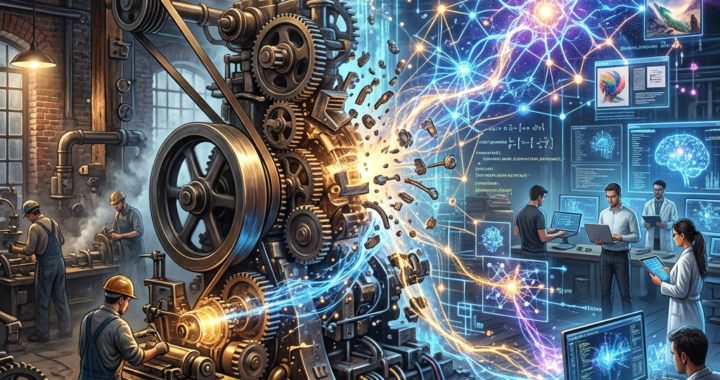
This means the workplace of the future might not be a fight, between humans and machines. Instead the workplace of the future could be a mix of human ideas and artificial intelligence.
1.The Impact of AI on Jobs and New Job Opportunities
I see that one of the positive effects of AI is the creation of new career opportunities. When businesses adopt technology they require professionals who can develop, manage, maintain and improve AI systems.The impact of AI on jobs.
Growing career areas include:
AI and machine learning
Data science
Cybersecurity
AI software development
Robotics
Cloud computing
AI project management
Technology consulting
AI ethics and governance
Digital marketing
I notice that new roles are also emerging around AI. Companies need people who understand how to use AI tools while keeping accuracy, quality, privacy and brand standards in check.
Therefore I see that the impact of AI on jobs is not, about job losses. AI can also create new professions that were difficult to imagine a decade ago.
2.The Impact of AI on Jobs and Employee Productivity
AI can become a partner in productivity. Of spending hours on repetitive activities employees can use AI to finish routine tasks more efficiently.
For example AI can help with:
- Research
- Data organization
- Writing drafts
- Scheduling
- Document analysis
- Customer support
- Software testing
- Basic reporting
When used correctly these AI tools can give workers time to focus on strategic thinking, creativity, communication and problem‑solving.
This is one of the encouraging aspects of the impact of AI on jobs. Technology can remove some tasks and allow employees to spend more time on work that requires human judgment.
3.The Impact of AI on Jobs, Tasks, and Job Displacement
Despite its advantages artificial intelligence can also bring problems. Some jobs involve a lot of repeated actions that can be done by machines.
Entering data, simple office work, basic customer help and some regular manufacturing jobs might be done more and more by machines.
It’s important to know the difference between a job and a task. Artificial intelligence might take over some parts of a job. Not completely remove the job. For example a person who helps customers might still be needed to deal with problems even if a robot answers easy ones.
Some jobs might have much less need, for people when machines get cheaper and better.
This is one of the problems when it comes to how artificial intelligence affects jobs especially for workers whose jobs are full of things that are easy to predict and repeat.
4.AI Is Changing the Skills Employers Want
As technology keeps changing companies are becoming more interested in employees who can mix skills with people skills.
Important skills, for the future could be:
Critical thinking
Creativity
Communication
Problem-solving
Adaptability
Emotional intelligence
Digital literacy
Data interpretation
Managing AI tools
Technical skills are helpful. People skills are still very important. An AI program can come up with an answer. A person might still need to check if that answer is right, helpful, fair and suitable.
People who always work on improving their skills might be more ready to use chances.
5.The Impact of AI on Jobs Across Different Industries
AI is not, for tech companies. I see that every big industry can benefit from AI or feel the power of artificial intelligence.The impact of AI on jobs and in various industries.
Healthcare
I believe AI can help healthcare professionals with research, paperwork, picture analysis and keeping patient records. Human professionals are still needed for diagnosing choosing treatments talking to patients and giving care.
Finance
Financial organizations use AI to spot fraud, assess risk help customers and forecast trends. Employees can use AI tools to study data and make more informed choices.

Education
AI can help with learning, research, lesson preparation and administrative work. I truly believe teachers remain important because education requires encouragement, communication, creativity and understanding.
These examples show that the impact of AI on jobs will vary from one industry to another.
6.The Impact of AI on Jobs and Business Efficiency
Businesses are always looking for ways to cut costs and boost performance. AI can look at data fast spot patterns. Make repetitive tasks automatic.
A company could use AI to guess how customers it will need, spot odd transactions make marketing campaigns sharper or make inside work smoother.
Higher productivity can help businesses grow and maybe open chances. When businesses get more competitive they may move into markets and create new products and services.
The good things do not always get shared the same way. Companies must plan carefully so workers get chances to keep up with tech changes.
7.Reskilling Can Help Workers Adapt
One powerful solution to job disruption is reskilling.
Reskilling means learning abilities that prepare a person for a different role. Upskilling means improving skills needed for an similar position.
For example an administrative worker could learn data analysis, digital project management or AI‑assisted productivity tools. A marketer could learn how to use AI for research and campaign optimization.
Companies can support employees through:
- Training programs
- Online courses
- Mentorship
- Technology workshops
- development
- Internal career opportunities
Workers can also take responsibility for lifelong learning. The ability to adapt may become one of the valuable career advantages, in an AI‑powered economy.
8.The Impact of AI on Jobs and Workplace Inequality
Another major challenge is inequality. Not every worker has the access to education. Not every worker has the access to technology. Not every worker has the access to professional training.
Skilled workers may benefit a lot from AI because they can use it to make their work better. Workers in jobs that are very repetitive may have problems because of AI.
If companies and governments do not offer training and help the difference, between different groups of workers could get bigger.
9.The Impact of AI on Jobs and the Value of Human Skills
AI is powerful. Ai does not erase the importance of human abilities.
Skills such, as empathy, leadership, negotiation, creativity, teamwork and emotional intelligence are hard to replace by software.
Customers may also prefer interaction when dealing with sensitive decisions personal relationships or complicated problems.
For this reason people should not see AI as a competitor. Learning how to collaborate with AI may be a strategy.
10.The Impact of AI on Jobs and the Future of Human-AI Partnership
The future workplace will probably have teamwork between people and smart machines.
Of spending a whole day doing simple jobs a worker might use artificial intelligence to do first research sort out details make a starting version or spot trends. The worker then looks at the outcome makes it better and decides what to do
This kind of teamwork can make a way to work.
Artificial intelligence brings action, automatic tasks and the ability to handle lots of data. People bring understanding, good choices, new ideas taking care and feelings.
This way of working might change how people think about AI. Of being scared people could see it as a helpful tool, for their job.
The Impact of AI on Jobs: Biggest Opportunities for Workers
There are exciting things connected to AI:
Higher productivity: People can do some jobs more quickly.
Careers: AI leads to need for new kinds of jobs that require special skills.
Better decision-making: AI can find patterns in amounts of information.
More creativity: Employees can use AI to think of ideas and come up with plans.
The Biggest Challenges of AI for Workers
At the time several problems need to be taken seriously:
Job displacement: Some jobs that are repetitive might disappear.
Skills gaps: People might need kinds of technical and digital skills.
Privacy concerns: AI tools can look at a lot of company information.
Bias: If AI is not made well it can make decisions.
Workplace pressure: Companies might want workers to work faster as AI makes things more efficient.
Access: Some workers might not get enough chances to learn new skills.
Fixing these problems will need people from companies, workers, schools and the government to work together.
How Workers Can Prepare for an AI-Powered Future
I think workers do not have to become AI engineers to stay useful. A better way is to see how AI changes the work that each worker does.
First I learn the facts, about AI and try using helpful tools. I look for the parts of my job that AI can help with. Then I focus on skills that need creativity, good judgment talking with people and face‑to‑face contact.
I also keep learning all the time. Technology moves fast. Ai also moves fast. A skill that is useful today might change tomorrow.
My best career plan is not to fight AI over jobs where machinesre faster. Instead I train to use AI as a helper while building the skills that machines cannot copy easily.
Conclusion: The Impact of AI on Jobs and the Future of Work
The impact of AI on jobs is complicated, strong and always changing. Artificial intelligence can remove some tasks change jobs and make new roles all at the same time.
Even though worries about losing jobs make sense AI also brings chances for making more coming up with new ideas learning and growing in your career. The main thing is to get ready.
People who learn how to use technology think creatively solve problems talk well and be flexible can get ready for a world that is always changing. Companies that spend on learning and use AI in a way can make better and more efficient teams.
The future of work doesn’t have to be a fight between people and machines. A better and more true future is one where people and AI work as a team—using creativity and decisions along, with the speed and strength of smart machines.